Why your haldi doodh may not be working
Turmeric is one of the most studied spices in the world. The catch: your body struggles to use it on its own.
ہلدی کے ساتھ کالی مرچ اور گھی ضرور شامل کریں
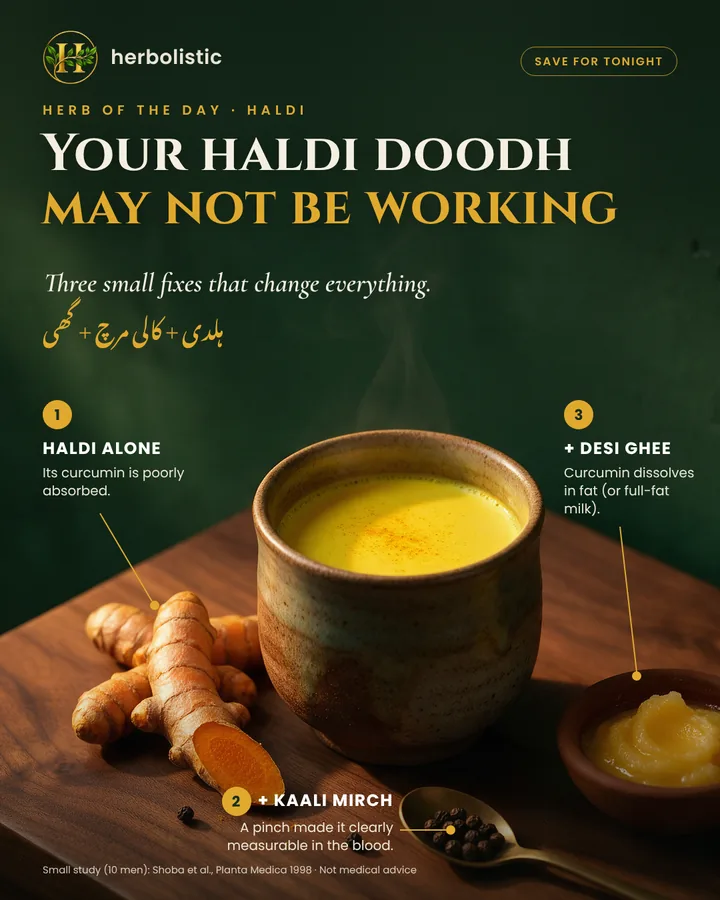
Haldi gets its colour and most of its research interest from curcumin. In the lab, curcumin looks impressive. In people, very little of it reaches the blood, because it is poorly absorbed and quickly broken down.
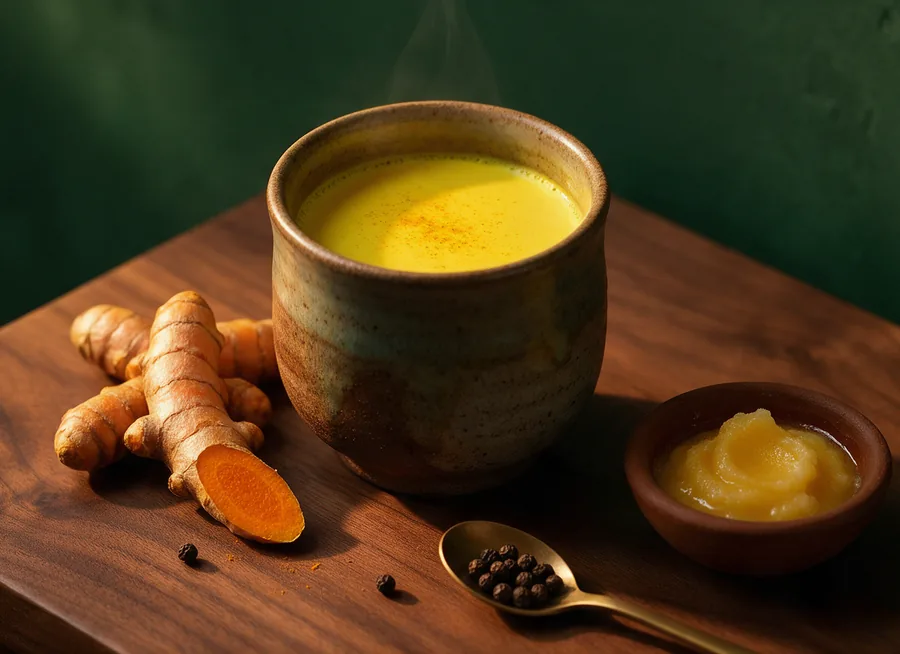
This is where traditional cooking was quietly clever. Haldi is almost never eaten alone in desi kitchens: it goes into ghee, oil and milk, usually next to black pepper.
What the research says
In a small human study, taking piperine (the compound that makes black pepper hot) together with curcumin raised curcumin levels in the blood about 20-fold compared with curcumin alone. Curcumin also dissolves in fat, so a little ghee or full-fat milk helps it travel.
Research on what curcumin does for joints, mood or inflammation is still mixed, and most trials use concentrated extracts, not a cup of haldi doodh. So think of it as a warm, traditional drink that you can make work a little better, not a medicine.
Be careful: Taking blood thinners, pregnant, or have gallbladder problems? Talk to your doctor before turmeric supplements. Food amounts are generally fine.
Sources: Shoba G. et al., Planta Medica 1998 · NIH NCCIH, Turmeric fact sheet. General education only, not medical advice.